Tired of Data Silos? The Power of a Bespoke Business Platform
Tired of Data Silos? The Power of a Bespoke Business Platform If you run a complex or growing business in the UK, chances are that your processes, while efficient on paper, are hampered by hidden inef...
Tired of Data Silos? The Power of a Bespoke Business Platform
If you run a complex or growing business in the UK, chances are that your processes, while efficient on paper, are hampered by hidden inefficiencies in practice. You might find yourself using spreadsheets alongside accounting software, which then talks (badly) to your sales system, and maybe a separate tool for inventory management. This fragmented approach is known as "data siloing," and it doesn't just slow you down—it fundamentally limits your potential for growth. Finding the right technological backbone is critical.
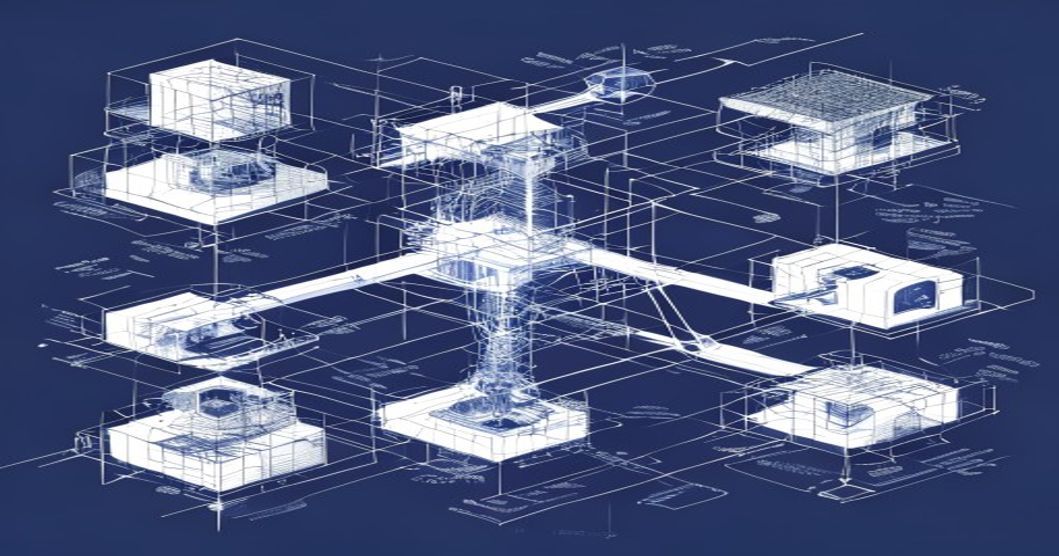
Many businesses assume that purchasing an off-the-shelf solution will solve their problems. While these products are helpful starting points, they often fail when faced with the unique complexities of a growing UK enterprise. What you really need isn't just more software; you need a cohesive operational backbone. This is where adopting a bespoke business platform UK solution comes into play. A custom platform acts not merely as a collection of tools, but as the unified digital operating system for your entire company, built precisely around how you actually do business.
Why Off-the-Shelf Software Fails Complex UK Businesses
The market is flooded with excellent software solutions: fantastic CRMs, robust ERPs, and specialized niche tools. But here lies the core challenge: every commercial piece of software was designed for a 'typical' or 'average' business model. By definition, your business is not average; it is unique.
When you adopt off-the-shelf systems (often called ‘cookie-cutter’ solutions), you are forced to make difficult compromises. You must reshape your powerful, established internal processes—the way decades of institutional knowledge have taught you to operate—to fit the rigid structure of the software package. This is an expensive and often counterproductive exercise.
Consider a growing manufacturer: their sales team uses CRM (Customer Relationship Management) data to predict demand. Their operations team uses raw production figures for inventory planning, which then requires Finance (ERP) to budget materials. If these three systems cannot speak fluently with each other—if they are trapped in separate digital silos—then your sales predictions might lead to excess inventory costs that the finance department wasn't prepared for. You lose visibility, you introduce manual data entry points (where human error creeps in), and critically, you waste valuable time juggling multiple logins and incompatible interfaces.
The biggest hidden cost of off-the-shelf software isn't the annual subscription fee; it’s the cost of wasted efficiency—the friction created by having technology that doesn't quite align with your reality. For businesses focused on digital transformation uk businesses, this limitation is a major blocker.
Understanding the Core Components: CRM, ERP, and Operations Integration
To truly understand the power of a bespoke platform, we must first deconstruct the core functional areas that every modern business needs to manage: Sales/Customer Management (CRM), Financial Control (ERP), and Day-to-Day Execution (Operations).
The Purpose of CRM (Sales Focus)
A Customer Relationship Management system is designed to manage interactions with current and potential clients. It tracks leads, manages sales pipelines, schedules follow-ups, and records every customer touchpoint. Its primary goal is revenue generation and improving customer satisfaction.
The Necessity of ERP (Finance & Back Office Focus)
Enterprise Resource Planning systems are the central nervous system for finance. They manage billing, general ledger accounting, accounts payable/receivable, inventory valuation, and core HR functions. The ERP’s goal is financial compliance, stability, and accurate reporting.
The Power of Integrated Operations Management
This encompasses everything between order placement and product delivery. It includes supply chain management (SCM), manufacturing scheduling, warehouse logistics, quality control checks, and project tracking. These processes are dynamic and highly bespoke; they rely entirely on the specific physical or digital flow unique to your company.
The traditional challenge is that these three functions speak different "languages." The sales team talks about potential revenue (£); finance speaks in debits and credits (currency accounting); operations speaks in units produced per day (volume). A truly bespoke business platform acts as a universal translator, ensuring that when an order is placed on the CRM side, it instantly creates a material requirement checklist for Operations, and simultaneously updates the committed revenue figure within Finance—all without human intervention.
This integration of CRMs, ERPs, and operational workflows into one unified system is often what businesses mistakenly try to achieve by stitching together various tools. However, manual integrations are fragile. A bespoke platform hardwires these connections at the core level.
The Benefits of a Unified Bespoke Platform Approach
Building your digital backbone from scratch—or through expert consultation and development—is not an expense; it is arguably the single most significant investment in scalable operational efficiency. The benefits translate directly into measurable Return on Investment (ROI).
1. Elimination of Data Silos and Bottlenecks
This is the primary value proposition. Instead of data existing in isolated corners, every piece of information—from a single marketing lead to the final cash receipt—lives in one authoritative source. When an employee logs into the system, they see the complete, real-time history of that customer or transaction, regardless of which department initiated it.
2. Hyper-Efficient Workflow Automation
A bespoke platform allows you to automate workflows tailored precisely to your business rules. For example: when a sales contract is signed (CRM), the system can automatically generate the necessary Purchase Order document, assign it to the production line schedule (Operations), and trigger the invoice creation in Finance (ERP). The result? Near-zero manual intervention, massive time savings, and reduced errors.
3. Scalability Without Limitations
If your business explodes in size or scope—say, you move from handling local UK accounts to international trade, or launch a brand new product line—an off-the-shelf system might break or hit hard limits. A bespoke platform is built with growth modeled into its architecture. It can flex and adapt as rapidly as your ambition does.
For companies contemplating AI & Machine Learning integration down the line, starting on a highly flexible platform greatly accelerates adoption. The infrastructure is already there to handle complex data inputs that an off-the-shelf system may not be equipped for.
Our Process: Building Your Custom Operating System in Scotland
Developing a bespoke business platform sounds daunting because it *is* complex. However, at Niletech, we structure the process to eliminate risk and keep your business running smoothly throughout the transition. We don't just write code; we become part of your operational team.
Phase 1: Discovery and Blueprinting (Understanding Your Reality)
We begin by listening. There is no rush to build anything. Our goal in this phase is deep immersion—understanding every manual workaround, every moment of frustration with current systems, and identifying the absolute key metrics that define success for your business. We map out your 'as-is' processes and then design the optimal 'to-be' process.
Phase 2: Design and Technology Selection
We select the appropriate technology stack—choosing elements like Web & Mobile Development for user interfaces or utilizing modern API standards—that best serves your specific needs. We define the modular architecture, ensuring that the system is inherently scalable and maintainable.
Phase 3: Iterative Development and Integration
This phase involves building the platform in digestible chunks. Rather than dumping a massive system onto you at the end (the 'big bang' approach), we use phased rollouts. This allows departmental teams to test, provide feedback, and adopt new workflows incrementally. Crucially, we focus heavily on Custom Software Development modules that ensure perfect data flow between existing tools and the new system.
Phase 4: Training, Testing, and Deployment
The final stage involves rigorous user acceptance testing (UAT) with your key personnel. We train your teams not just on clicking buttons, but on how the *process* has improved because of the technology. The deployment is managed carefully to ensure minimal disruption to daily operations.
Choosing the Right Time for Digital Transformation
Many UK business owners view digital transformation as a massive, disruptive project that must be undertaken when funding is abundant and time is unlimited. This perception is inaccurate. Readiness is less about money and more about strategic alignment.
The Trigger Points
There are clear signals that signal that your current tech stack is insufficient:
- You repeatedly complain to management that "we don't know where the data is."
- Sales takes up to three weeks just to close a complex client deal because information jumps between departments.
- Forecasting and budgeting feel like guesswork rather than analysis.
- Manual processes (like exporting data into Excel) consume more time than they save.
These pain points are not technical glitches; they are symptoms of an inadequate operational blueprint, which a bespoke platform is designed to cure.
Making the Business Case
To properly justify this investment internally, you must shift the focus from technology features (e.g., "it has five modules") to business outcomes ("we can process 30% more orders with the same staff"). A customized solution improves your operations management software capabilities by embedding intelligence directly into your core workflows.
Furthermore, utilizing a platform that supports components like low code platform integration means you are not locked into one vendor’s rules. You retain maximum flexibility to adapt and adopt future technologies as they emerge in the market. We can show examples of how this adaptability has benefited our clients by reviewing Our Work & Case Studies.
Conclusion: Your Digital Future Requires a Bespoke Foundation
Navigating the technological landscape for UK businesses is challenging because your greatest asset—your unique way of operating and serving your customers—is inherently non-standard. Trying to fit that brilliance into standardized, off-the-shelf software is like trying to pour a uniquely shaped liquid into a square box; something crucial always gets lost.
The necessity of implementing a cohesive bespoke business platform UK solution moves beyond merely "improving things." It allows you to solidify your competitive advantage by digitizing your processes optimally. By unifying the functions of CRM, ERP, and Operations into one single source of truth, you gain unmatched visibility, radically improve decision-making speed, and build a resilient digital foundation capable of supporting growth for decades.
Ready to move beyond off-the-shelf limitations and design an operating system that is built precisely for the complexity and ambition of your enterprise? Speak with the experts at Niletech today about designing your bespoke business platform and defining your path to operational excellence.
Start your project with us
Have an idea in mind? Let's talk it through. We are here to listen, guide, and build something great together.
Let's Talk