Building Your Bespoke Digital Core Platform: The Future of UK Business Tech
Building Your Bespoke Digital Core Platform: The Future of UK Business Tech For modern British businesses operating in today’s rapidly evolving economic landscape, simply having a website or using pac...
Building Your Bespoke Digital Core Platform: The Future of UK Business Tech
For modern British businesses operating in today’s rapidly evolving economic landscape, simply having a website or using packaged software is no longer sufficient for growth. If your operational data is trapped across multiple 'silos'—meaning your sales team uses one system, finance another, and customer service relies on a third—your potential is severely capped. The key to unlocking efficiency and achieving true scalability lies in developing a bespoke digital core platform UK. This platform isn’t just an upgrade; it represents a foundational overhaul of how your entire business operates. It means moving past reactive maintenance and building a single, powerful digital backbone that drives predictable, profitable growth across every department.
At Niletech, we understand that technology implementation can feel overwhelming and abstract to business leaders focused on profitability. This guide is designed specifically for you—the decision-maker who needs to understand the immense Return on Investment (ROI) and practical benefits of enterprise modernization UK. We will demystify complex topics like AI and API architecture, ensuring you walk away with a clear understanding of why investing in a tailored digital core platform is arguably the most critical strategic move your business can make today.
What is a Digital Core Platform and Why Does Your Business Need One?
In simple terms, imagine your current business technology stack as a collection of brilliant but isolated island resorts. Each resort (or piece of software) works perfectly within its own boundaries—the accounting system is great at ledgers; the CRM is excellent at contacts. However, getting guests (data) to seamlessly move from one island to another often requires manual effort, frustrating workarounds, or costly physical barges.
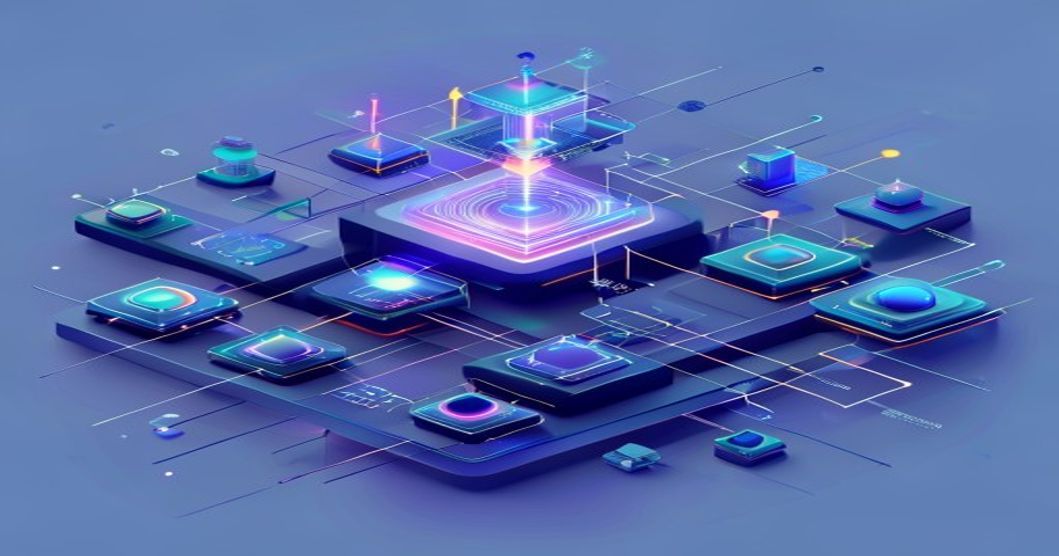
A Digital Core Platform acts as a sophisticated, interconnected mainland highway linking all these islands. It is not simply aggregating data; it fundamentally changes how your business processes interact with that data. Instead of logging into five different systems to complete one customer request (e.g., checking inventory, updating billing, and scheduling support), the core platform manages this entire journey automatically in a single workflow.
The Shift from Software Ownership to Platform Empowerment
Traditionally, businesses bought packaged software—a rigid solution designed by someone else for generic needs. While these systems are useful, they inevitably contain gaps because every successful business is unique. A custom software development approach allows the platform to be built precisely around your existing processes and future growth ambitions. This level of tailored capability is what transforms a cost centre (the IT expense) into an engine for competitive advantage.
A Digital Core Platform’s primary function is unblocking data and process flow. It centralizes visibility, automates handoffs, and ensures that every department operates using the single source of truth—your customer or operational data—reducing errors and accelerating decision-making.
Recognizing Your Current Tech Pain Points
Before committing to a foundational change, it is crucial to honestly assess where your current technology infrastructure is failing the business. Common pain points that signal the need for a bespoke digital core platform include:
- Data Silos: Difficulty getting a single view of the customer journey because different departments use separate tools (e.g., marketing doesn't know what service issues finance tracked last month).
- Manual Processes: Relying on spreadsheets, email follow-ups, or manual data entry to bridge gaps between systems, which is time-consuming and prone to human error.
- Limited Scalability: Using software that works well today but cannot handle a 30% increase in transaction volume without significant painful upgrades.
- Lack of Intelligence: Operating on historical data (what happened), rather than predictive insights (what will happen)—a key area where AI & Machine Learning solutions can revolutionize your operation.
Understanding API-Led Architecture for Seamless Integration
If the Digital Core Platform is the highway, then APIs (Application Programming Interfaces) are the universal exit ramps and service points along that road. If you hear 'API-led architecture,' do not picture complex coding—think modularity, flexibility, and connectivity.
In business terms, an API simply allows two distinct pieces of software to talk to each other using a standardized digital language, without needing to know how the other piece works internally. It’s like giving separate departments a common communication protocol that everyone agrees upon.
The Value Proposition of API-led Design
Adopting an API-led architecture UK approach means building your core platform in small, manageable, and independently functional components (or 'microservices'). This is revolutionary for businesses engaging in enterprise modernization UK because:
- Flexibility: You are never locked into a single vendor or system. If your accounting software updates, only the API connection needs minor adjustment; the rest of your core platform remains stable and operational.
- Speed to Market: Want to add a new feature—say, tracking carbon emissions on product shipments? Instead of requiring a massive, months-long overhaul, the team can build a small, specialized service (via API) that plugs into the existing structure in weeks. This significantly reduces the risk associated with UK retail API integration efforts.
- Resilience: If one part of your platform goes down (e.g., the inventory tracker), the rest of the critical functions (like customer order processing) continue to run seamlessly because they are decoupled from the failure point.
Case Study Example: A mid-sized UK logistics firm, struggling with manual data transfer between their warehouse management system and invoicing software, worked with us. By implementing a bespoke API layer (instead of upgrading both legacy systems), we automated data syncing for 50+ daily shipments. This eliminated the need for intermediary spreadsheets, saving the client an estimated 40 hours of manual labour per week and reducing billing errors by 98% within the first quarter.
This modularity is paramount when planning a bespoke digital core platform UK, ensuring that every investment adds measurable value and doesn't create future technical debt. It allows for targeted solutions like best practice API integration strategies even on existing infrastructure.
The Power Play: Integrating Bespoke AI into Your Platform
The true leap from an advanced system to a truly intelligent operation comes through Artificial Intelligence. When we discuss AI integration services UK, it is vital that business leaders understand that this goes far beyond implementing simple chatbots or automated email responses.
Bespoke AI integrated into your digital core platform acts as a predictive layer across all functions. It allows the system to move from merely recording what happened (descriptive analytics) to actually advising on and automating what should happen (prescriptive analytics).
How Bespoke AI Automates Complex Decisions
Consider customer churn prediction. A basic CRM might simply tell you, "Customer X hasn't logged in for 30 days." Your core platform, enhanced with bespoke AI, doesn't just report this; it analyzes that inactivity against their purchase history, support tickets, and industry benchmarks to advise: "Customer X has a high risk of churning. Trigger an automated personalized offer from the sales team *and* schedule a proactive call from account management within 48 hours."
Other critical applications include:
- Supply Chain Optimization: Predicting bottlenecks or stock shortages weeks in advance based on global economic indicators and localized demand spikes. This requires robust AI deployment strategies for UK supply chains.
- Fraud Detection: Real-time flagging of unusual transaction patterns that human oversight might miss, safeguarding revenue immediately.
- Resource Allocation: Optimizing staff schedules or machinery usage based on predicted workload volumes.
By making the AI native to your core platform (and not bolted on as a standalone piece of software), you guarantee that the intelligence has access to *all* relevant data—financial, operational, and customer interaction data—leading to unmatched accuracy and ROI.
Migration Roadmap: Replacing Off-the-Shelf Systems with Custom Tech
The concept of migrating from decades of trusted, reliable 'off-the-shelf' systems (often called legacy systems) to a new bespoke digital core platform can sound terrifying. This is the biggest concern for any business owner—will the transition risk disrupting daily operations?
Our approach, particularly when undertaking custom software development Scotland or anywhere in the UK, is never a "big bang" switchover. It is a methodical, phase-gate process focused entirely on minimizing business disruption and maximizing measurable adoption.
Phased Implementation: The Key to Success
A successful migration roadmap typically follows these structured phases:
- Discovery & Blueprinting (The 'Why'): We start by mapping your entire current process flow, identifying the most expensive or inefficient points of friction. This phase focuses heavily on defining measurable KPIs and articulating the expected ROI from the new platform.
- Core Module Build-Out (The Quick Win): Instead of building everything at once, we tackle one high-impact area first—perhaps integrating customer relationship management with billing. This provides immediate, visible wins that build confidence within your teams and demonstrate tangible value quickly.
- Integration & Testing (The Stability Check): We build the API layers around the new module, ensuring it talks correctly to existing mission-critical systems that cannot yet be replaced. Rigorous user acceptance testing (UAT) by actual employees is paramount here. This phase ensures seamless core system integration strategies.
- Scaling and AI Enhancement (Future-Proofing): Once the basic core is stable, we layer in advanced services—the predictive AI models, complex integrations, or specialized web app AI solutions—making the platform smarter over time.
Start your project with us
Have an idea in mind? Let's talk it through. We are here to listen, guide, and build something great together.
Let's Talk